


What Are the Top China Surface Mounted Suppliers?
Choosing among China Surface Mounted suppliers requires more than comparing prices or counting product categories. A reliable partner should demonstrate practical manufacturing experience, stable component sourcing, controlled reflow profiles, and complete inspection records. Ray Prasad, a recognized SMT engineer and author of Surface Mount Technology, has stated, “The key to successful surface mount assembly is process control.” That principle remains useful when evaluating suppliers for prototypes, small batches, or high-volume production.
This outline will examine suppliers through measurable evidence. It will consider factory capabilities, PCB assembly equipment, placement accuracy, solder-paste management, AOI coverage, and traceability. Clear certifications can support credibility, but certificates alone prove little. Buyers should request sample reports, production photographs, and references from comparable industries. A supplier that explains defects openly may be more dependable than one promising perfection. That detail matters.
The discussion will also compare communication speed, engineering support, minimum order quantities, lead times, and export experience. A strong China Surface Mounted supplier should identify risks before production begins. For example, it may question an unclear component specification or recommend a better panel design. These actions reveal technical judgment. Still, this evaluation cannot remove every uncertainty. Online information may be outdated, and factory visits may not show ordinary production conditions. Therefore, readers should verify claims through samples, audits, and documented trial orders. The final ranking should remain practical, evidence-based, and open to revision. There is no perfect supplier. There is only a supplier whose process fits the project.
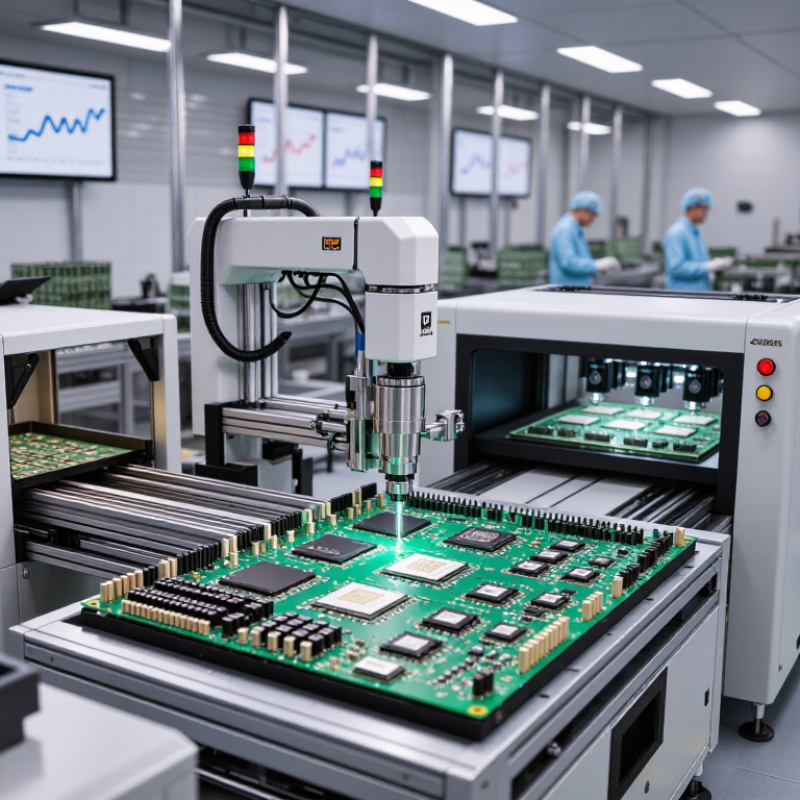
What Does “Surface Mounted Suppliers” Mean in China?
In China, “surface mounted suppliers” usually means companies serving surface-mount technology, or SMT, production. They may provide electronic components, printed circuit boards, solder paste, placement machines, inspection systems, or complete assembly services. The phrase does not describe one specific product category. Its meaning depends on the buyer’s project and sourcing stage.
An experienced buyer should check a supplier’s actual role before requesting prices. A component distributor may not offer assembly. An SMT factory may assemble boards but purchase most components externally. A machinery supplier may provide installation and training instead. During factory visits, practical details matter: feeder storage, humidity control, traceability labels, inspection records, and sample boards moving through production. These details often reveal more than a polished website.
Reliable suppliers should explain their quality controls clearly. Ask about incoming inspection, solder paste storage, automated optical inspection, rework procedures, and production capacity. Certifications can support trust, but they do not replace process evidence. Request recent samples, test reports, and realistic lead times. Be careful with unusually low quotations. They may exclude tooling, testing, packaging, or engineering changes.
Communication is another important measure. Technical drawings should be reviewed by qualified engineers, not only sales staff. Small misunderstandings can affect component orientation, pad design, or thermal performance. I have found that early questions prevent expensive corrections, although no supplier process is perfect. Even a capable factory may need closer supervision during a new product launch. Supplier selection, therefore, means matching technical capability with project risk, not simply choosing the lowest price.
| Evaluation Dimension | Meaning in the China SMT Supply Market | Common Industry Evidence | Practical Buyer Check |
|---|---|---|---|
| Service Scope | A capable supplier may offer turnkey PCB assembly, consigned assembly, or partial services such as component placement and soldering. | PCB Assembly Box Build Kitting | Confirm whether the supplier manages component purchasing, bare PCB sourcing, assembly, testing, and final packaging. |
| SMT Process Capability | Surface-mount production normally uses automated solder-paste printing, pick-and-place placement, and reflow soldering. | Solder-Paste Printing Pick-and-Place Reflow | Ask for supported package types, placement accuracy, minimum component size, and maximum PCB dimensions. |
| Through-Hole Support | Many projects combine SMT parts with through-hole components, so mixed-technology assembly can be important. | SMT THT Mixed Assembly | Check whether the supplier provides selective soldering, wave soldering, or manual insertion when required by the design. |
| Quality Standards | Professional electronics manufacturers commonly use documented quality systems and workmanship requirements. | ISO 9001 IPC-A-610 J-STD-001 | Request current certificates, process-control procedures, inspection criteria, and corrective-action records. |
| Inspection Coverage | Automated and manual inspections help identify solder-paste, placement, polarity, solder-joint, and hidden-joint defects. | SPI AOI X-Ray ICT | Determine which inspections are included as standard and which are charged separately or supplied on request. |
| Component Sourcing | Turnkey suppliers may source electronic components, while customer-supplied or hybrid purchasing models are also common. | Turnkey Consigned Hybrid | Review approved-vendor controls, authorized-distributor policy, counterfeit-prevention measures, and lot traceability. |
| Traceability | Traceability links materials and production records to a specific board, batch, work order, or component lot. | Barcode Tracking Lot Records Production History | Confirm how long manufacturing records are retained and whether serial-number or batch-level reporting is available. |
| Design for Manufacturing | Engineering support can identify layout, stencil, solder-mask, component-spacing, and test-access risks before production. | DFM Review DFA Review Stencil Review | Submit Gerber files, drill files, pick-and-place data, BOM, assembly drawings, and approved revision information for review. |
| Prototype and Volume Flexibility | Suppliers serve different production stages, from engineering prototypes and pilot runs to recurring mass production. | Prototype Pilot Run Mass Production | Ask for minimum order requirements, changeover procedures, sample approval steps, and capacity planning for repeat orders. |
| Materials Compliance | Export-oriented electronics production often requires control of restricted substances and declarations for regulated materials. | RoHS REACH Material Declarations | Clarify whether compliance applies to the complete assembly, individual components, packaging, and supplied documentation. |
| Testing Services | Testing may include electrical verification, programming, functional testing, burn-in, or customer-specific test fixtures. | ICT FCT Firmware Loading | Define test coverage, fixture ownership, test-program responsibility, pass/fail limits, and test-report format. |
| Delivery and Export Support | Suppliers serving international customers commonly coordinate export documents, packaging, labeling, and shipment preparation. | Commercial Invoice Packing List Export Packaging | Compare quoted lead time, production lead time, shipping method, packaging standards, and responsibility for customs documentation. |