

Why Choose Custom Aluminum Tri-Fold Blind Rivets?

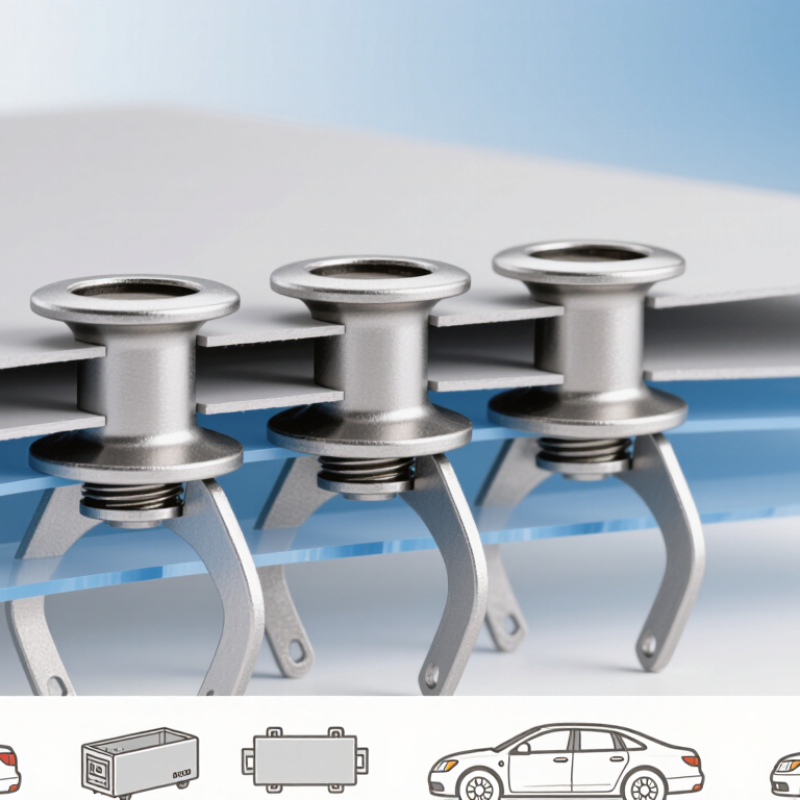
Custom Aluminum Tri-Fold Blind Rivets are designed for joints where access from one side is the only practical option. During installation, the rivet’s body expands into three broad legs behind the workpiece. That spread can help distribute load across softer materials, including thin aluminum sheets and some plastics. The result is a firm mechanical hold without reaching behind the panel to fit a nut. Useful in enclosures, vehicle interiors, and lightweight assemblies. But the application matters.

For this illustrative introduction, fictional fastening specialist Maya Chen offers a concise design principle: “Choose the rivet for the joint you have, not the joint you wish you had.” It is a simple reminder, not a substitute for testing. Material thickness, hole diameter, grip range, vibration, and environmental exposure all affect performance. A rivet that looks substantial may still be a poor match for a thin or fragile panel. Small details count.

This guide examines why custom aluminum tri-fold blind rivets may suit particular assemblies, how their three-leg expansion works, and what to check before specifying them. It also considers aluminum’s low weight and corrosion behavior, while noting that performance depends on the alloy, mating materials, and operating conditions. Measurements on a drawing are helpful. A sample joint under real loads is better. Customization can solve a genuine fit problem, though it may add cost and lead time. That trade-off deserves a close look.
Why Choose Custom Aluminum Tri-Fold Blind Rivets?

What Are Custom Aluminum Tri-Fold Blind Rivets?

A custom aluminum tri-fold blind rivet is a one-sided fastener made for joining materials when the rear of the assembly is difficult to reach. Its body is aluminum, while the mandrel material depends on the specified design. During installation, a rivet tool pulls the mandrel and folds the rivet body into three legs on the blind side. Those legs spread the load across a wider area than a conventional blind rivet may provide. The result can be useful with thin sheet, softer materials, or panels that need a broad bearing surface.

Fit matters.

“Custom” can refer to body diameter, grip range, head style, length, or mandrel configuration. These details should match the combined thickness and materials being joined. For example, a rivet with too short a grip may not form its legs correctly, while an oversized one can leave a loose or untidy joint. Check the hole size, panel thickness, and required strength before specifying dimensions. The aluminum body can help reduce fastener weight, but the complete assembly’s strength also depends on the mandrel, installation tool, and workpiece. A small sample installation is sensible; drawings alone do not always reveal how the legs will form in a particular material.

How Does the Tri-Fold Setting Process Work?

Why Choose Custom Aluminum Tri-Fold Blind Rivets?

How Does the Tri-Fold Setting Process Work?

A tri-fold blind rivet is set from one side, making it useful when the rear of a panel is difficult to reach. The installer first drills a hole matched to the rivet’s specified diameter and checks that the joined sheets sit flush. The rivet body enters the hole; its mandrel sits in the setting tool’s nosepiece. As the tool pulls the mandrel, the body expands behind the panel and forms three bearing legs. Those legs spread the load across a wider area than a simple tubular expansion. Then the mandrel breaks at its designed point. A firm clamp forms.

Hole quality matters. A rough edge or oversized hole can leave the rivet loose, even when the tool completes its pull. The FAA’s AC 43.13-1B gives conventional solid-rivet shop-head dimensions of about 1.5 times the shank diameter in width and 0.5 times the diameter in height. These are useful reference figures, not tri-fold acceptance limits; follow the rivet maker’s specifications and test the actual material stack. Small detail, big effect. On thin aluminum, a sample installation can reveal distortion or leg formation that is hard to judge from the front alone. Not every set looks perfect. That is a reason to inspect, not guess.

What Benefits Does Aluminum Offer?

Custom aluminum tri-fold blind rivets offer a useful mix of low weight and practical fastening performance. Aluminum is much lighter than steel, which can make a difference when many fasteners are used in a panel or enclosure. Less weight can also make parts easier to handle during assembly. That matters. A tri-fold body opens into three legs behind the workpiece, spreading the load across a wider area. This can help secure softer or more fragile materials without concentrating pressure at one small point.

Aluminum naturally forms a thin oxide layer that helps resist ordinary corrosion. It will not rust like iron or steel, though it is not immune to corrosion in every environment. Contact with dissimilar metals may also create compatibility concerns, especially where moisture is present. Aluminum is softer than steel, so it may not be the right choice for every high-load application. That trade-off deserves attention. Custom dimensions can help match the rivet to the material thickness and hole size, but they cannot compensate for an unsuitable design.

Tips: Check the grip range against the combined material thickness, and confirm the hole diameter before ordering. Test a sample in the actual materials. A small trial can reveal loose setting, surface damage, or an unexpected fit issue.

Why Choose Custom Aluminum Tri-Fold Blind Rivets? — What Benefits Does Aluminum Offer?

Dimension Aluminum Tri-Fold Rivet Characteristic Practical Benefit Selection Consideration
Blind-side setting The rivet body expands into three legs on the blind side as the mandrel is pulled. Allows installation when only one side of the assembly is accessible and creates a broad bearing area behind the workpiece. Confirm that the blind-side space is clear and that the joint materials can accommodate the formed legs.
Thin or softer materials The expanded legs spread the clamping force over a wider area than a conventional blind rivet of similar size. Can help reduce pull-through in suitable thin sheet, plastics, and other comparatively soft materials. Joint performance depends on the workpiece material, thickness, hole condition, rivet size, and installation quality; test the actual assembly where needed.
Low weight Aluminum has a density of about 2.70 g/cm³, substantially lower than common carbon steel at about 7.85 g/cm³. Can reduce fastener weight in lightweight assemblies and applications where overall mass matters. Aluminum rivets are not a direct strength-for-strength substitute for steel or stainless-steel fasteners.
Corrosion behavior Aluminum forms a thin, naturally occurring oxide film that helps protect its surface in many environments. May be a suitable choice for general outdoor or moisture-exposed applications when the alloy and surrounding materials are compatible. Saltwater, chemicals, surface damage, and contact with dissimilar metals can affect corrosion performance. Check the application environment.
Electrical and thermal properties Aluminum conducts heat and electricity more readily than steel. Can be useful where a conductive metal fastener is preferred and where heat transfer through the joint is acceptable. Do not use it where electrical isolation is required unless the joint design includes suitable insulating measures.
Custom sizing Diameter, body length, grip range, head style, and material combination can be specified for the intended joint. Helps match the fastener to the combined workpiece thickness, access, appearance, and installation requirements. Choose a rivet whose stated grip range covers the total material thickness, and follow the specified hole diameter and installation guidance.
Installation equipment Tri-fold blind rivets are installed from one side with a compatible blind-rivet tool and nosepiece. Can simplify assembly in enclosed sections or locations where access to the back of the joint is restricted. Check tool compatibility with the rivet diameter and mandrel, and verify that the tool can set the selected rivet correctly.
Strength and application limits Load capacity varies with rivet dimensions, alloy, grip range, workpiece materials, and joint geometry. Offers a practical fastening option when its verified performance matches the application requirements. Use published load data for the specific rivet and validate safety-critical joints through appropriate engineering analysis and testing.

Specifications and performance vary by rivet design. Confirm dimensions, grip range, material compatibility, and load requirements for the selected product and application.

Where Are These Rivets Commonly Used?

Where Are These Rivets Commonly Used?

Custom aluminum tri-fold blind rivets are often used to fasten thin, soft, or easily damaged materials when workers can reach only one side of a joint. During setting, the rivet’s body opens into three legs behind the panel. These legs spread the clamping force over a wider area than a standard blind rivet. A practical choice for delicate assemblies.

Common applications include ventilation ductwork, electrical enclosures, lightweight panels, signs, and some trailer or vehicle interior fittings. In these settings, aluminum can help keep the assembly light and resist ordinary moisture exposure. Tri-fold rivets may also suit plastics and composite sheets, but the panel’s thickness and flexibility matter. A material that bends too easily can still fail around the fastener.

Fit the rivet to the actual joint, not just the drawing. Check hole diameter, grip range, and the thickness of every layer. The setting tool must also match the rivet specification. A small detail, often missed. Aluminum is not ideal for every load or environment, and a broad-set rivet does not automatically make a joint strong. Test a sample assembly when the panel is brittle, unusually thin, or exposed to vibration.

Why Choose Custom Aluminum Tri-Fold Blind Rivets?

Tri-fold rivets form three broad legs on the blind side, helping spread the clamping load. They are commonly chosen for thin, soft, or brittle materials where a wider bearing area is useful.

How to read the chart: Bars identify typical application areas, not market share or usage frequency. Confirm rivet material, grip range, hole size, and load requirements for each specific assembly.

How Do You Choose the Right Rivet Specifications?

Choosing the right custom aluminum tri-fold blind rivet starts with the joint, not the rivet head. Measure the combined thickness of the sheets and select a grip range that covers it. Too little grip can leave the legs poorly formed; too much may prevent the rivet from clamping the stack firmly. Check the recommended hole diameter, too. A tight hole can damage the body, while an oversized hole can allow movement.

Material matters. ASTM B209/B209M-21 specifies minimum tensile strengths of about 228 MPa for 5052-H32 sheet and 290 MPa for 6061-T6 sheet. These figures describe the sheet, not the rivet’s holding capacity. NASA’s Fastener Design Manual, RP-1228, likewise emphasizes assessing fasteners within the joint and its loading conditions. For a tri-fold rivet, review tested shear and tensile data for the actual rivet size, alloy, and grip range. Don’t substitute sheet strength for joint testing.

Then consider head diameter, body length, and mandrel material. A wider head can spread bearing pressure across a thin panel, while a corrosion-prone material pairing may weaken a damp assembly over time. Check whether the folded legs clear wiring, foam, or nearby moving parts. Small details matter. I still verify the first installation on a sample stack; the catalog dimensions can look right, yet the formed legs may not suit the real panel.

REQUEST FOR PORPOSAL

Bring the essence of Current to your space! Whether you envision a cozy coffee kiosk, a stylish window café, a dynamic coffee bar, or a multi-station coffee drive-through, the possibilities are endless.  Please fill out the form below to submit your proposal request. Our team will review your information and get back to you shortly.