What Is the Best Cafe System for 2026?
Choosing the best Cafe System for 2026 is not just a software decision. It shapes the morning rush, when milk steams, tickets print, and a queue forms beside the pastry case. The right platform should connect point-of-sale, payments, inventory, staff scheduling, and customer loyalty without slowing service. Yet features alone do not make a cafe run well.
The National Restaurant Association’s 2025 State of the Restaurant Industry report projected U.S. restaurant sales of $1.5 trillion and employment of 15.7 million people. These figures describe the broader restaurant sector, not cafes alone. Still, they show the scale and pressure of food-service operations. For independent cafe owners, a few seconds saved per order can matter. So can accurate stock counts, clear sales reports, and reliable support when a terminal fails.
Hospitality still matters most. Restaurateur and hospitality expert Danny Meyer wrote in Setting the Table, “Business, like life, is all about how you make people feel. It’s that simple, and it’s that hard.” A Cafe System should support that promise, not replace human service. There is no perfect platform. A feature-rich system may overwhelm a small team, while a cheaper option may lack useful integrations. This guide compares the practical trade-offs: ease of use, total cost, hardware, reporting, and room to grow. The best choice depends on the cafe’s size, workflow, and customers. And sometimes, the simplest setup wins.
What a Cafe System Is and How It Supports Daily Operations
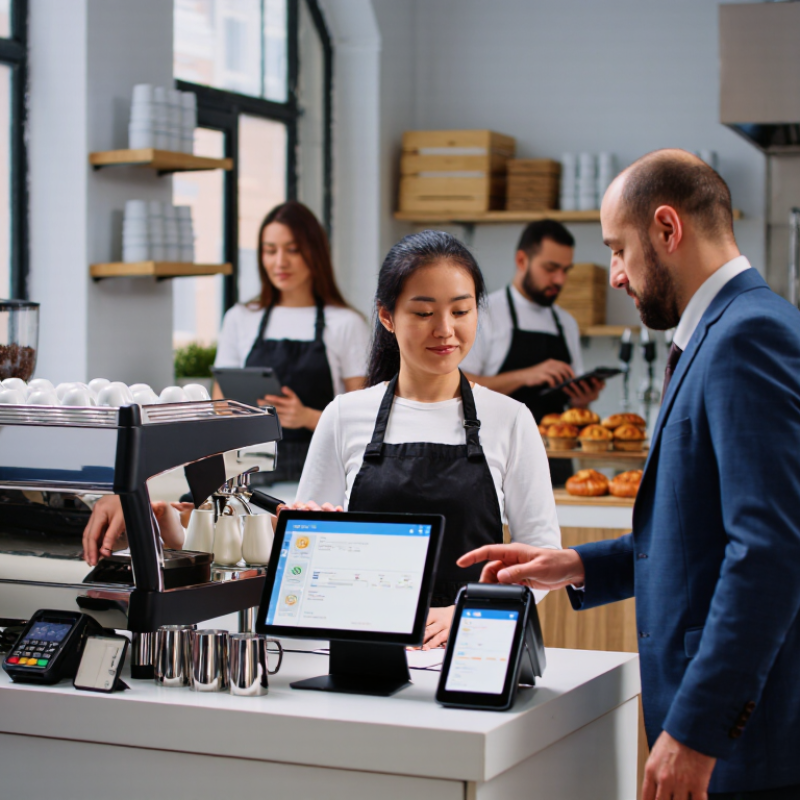
A café system is the connected set of tools that helps staff take orders, collect payment, track stock, and review sales. It may combine a till, card terminal, kitchen display, and back-office software. At 8 a.m., that connection matters: a milk alternative sells out, the menu updates, and the next barista can see the change. Small details matter.
The National Restaurant Association’s 2024 State of the Restaurant Industry report found that 76% of restaurant operators said technology gave them a competitive edge. That figure supports investment, but it does not mean every café needs a complicated setup. A useful system should reduce repeated entry, flag low stock, and show whether a busy lunch shift actually earned money. It should also make corrections easy when a modifier or price is wrong. A dashboard can look tidy while the stock count is not. That is a real weakness, and managers still need to check deliveries and waste by hand. Before choosing tools, map a normal shift: who takes orders, where errors occur, and how closing totals are checked. The best fit is the one staff can use reliably under pressure, not the one with the longest feature list.
The Core Components of a Modern Cafe System
A modern cafe system is more than a register. It connects ordering, payment, kitchen communication, inventory, and sales records. When these parts share accurate information, staff spend less time correcting tickets and more time serving guests. A clear screen helps during the morning rush. So does a printer that places drink orders where the barista can see them.
The ordering interface should be quick to learn, with readable buttons and sensible modifiers for milk, size, and temperature. Payment tools need to handle common transaction types and provide dependable receipts. Behind the counter, kitchen displays or printed tickets should show changes clearly, such as “oat milk” or “no ice.” Small details matter. Inventory tracking can flag low coffee beans or takeaway cups, but estimates still need regular checks against actual stock. Sales reports are useful when they show patterns by hour and item, not just a pile of totals.
Reliability deserves a practical test. Try the system during a busy service, check what happens if the internet drops, and ask staff where mistakes still occur. A feature list can look impressive. It may also hide a clumsy workflow. The best setup depends on the cafe’s menu, team size, and service style, so leave room to revise settings after real shifts.
How to Assess Cafe Systems for 2026
What Is the Best Cafe System for 2026?
How to Assess Cafe Systems for 2026
Choosing a cafe system starts with the actual workday, not a feature list. The National Restaurant Association’s 2024 State of the Restaurant Industry projected $1.1 trillion in U.S. foodservice sales and a workforce of 15.7 million. That scale makes labor efficiency and reliable service practical concerns, even for a small cafe. Test systems during a simulated morning rush: enter a cappuccino with oat milk, split payment, and send the order to the correct station. Watch for delays and confusing prompts. A system can still feel clumsy.
Measure more than checkout speed. Track order-entry time, voids, stock discrepancies, and how long closing takes. Check whether staff can update modifiers without manager help, and whether inventory reports reflect real recipes and portion sizes. Ask how offline transactions are handled, what data can be exported, and which fees apply beyond the monthly charge. Then test the answers yourself. A polished demo may not reveal the awkward bits.
Include the people who will use it. Have a new hire complete common tasks, then ask a barista to explain the steps in their own words. If either person hesitates, note where. Compare results across several shifts, not one quiet afternoon. No scorecard captures every service quirk, and my own first-choice metric—speed—can overlook mistakes that surface later. A short trial with real menu items is usually more revealing than another sales presentation.
Comparing Cafe System Types and Their Trade-Offs
A café system may mean a register-led POS, a cloud-based platform, or a modular setup linking orders, payments, and inventory. Each solves a different problem. A basic POS can be quick to learn and affordable, but staff may need to re-enter sales figures into separate stock tools. That becomes awkward when oat milk runs low during a morning rush. Cloud systems let managers check sales remotely and update menus centrally; they also depend on a reliable connection and careful account security. Modular systems offer flexibility, but integrations can fail or create extra support work.
Demand makes those trade-offs practical, not theoretical. The National Coffee Association’s 2024 National Coffee Data Trends report found that 67% of U.S. adults had coffee in the past day. The National Restaurant Association’s 2024 State of the Restaurant Industry projected U.S. restaurant sales of $1.1 trillion. These figures describe broad markets, not café software performance, so they cannot prove one system increases revenue. Still, they signal why fast checkout and accurate stock counts matter. For a single counter with a short menu, a simple system may be enough. A café managing table service, takeaway, and several locations may value integrated reporting more. I would test order edits, refunds, and offline behavior before choosing. Small details matter. A system that looks polished in a demo may still slow a crowded queue.
How to Match a Cafe System to a Business’s Needs
Choosing the best cafe system for 2026 starts with the work your team needs it to handle. A compact espresso bar may prioritize fast checkout and clear order tickets. A cafe with table service may need floor management, split bills, and reliable communication between servers and the kitchen. List your busiest tasks before comparing features. Watch a real shift, too: the awkward handoff at the pastry case may matter more than a polished dashboard.
Tips: Ask staff to test common orders, refunds, and menu changes. Check whether sales and stock reports are easy to understand. Confirm what happens when the internet drops. Small details count.
Match the system to your volume, menu, and staffing—not to the longest feature list. If you sell seasonal drinks, make sure edits are simple and prices update consistently across ordering channels. If several people manage the cafe, review user permissions and training needs. Request a full cost breakdown, including setup, hardware, support, and ongoing fees. A trial using sample orders can reveal confusing screens before launch. Still, software cannot repair every bottleneck. No system will fix a menu that changes daily without a clear process; sometimes the problem is the workflow, not the technology. Keep room to reassess as the cafe grows.
What Is the Best Cafe System for 2026? How to Match a Cafe System to a Business’s Needs
These illustrative ratings show how different system setups may fit common cafe priorities. A focused single-site cafe may prefer a lightweight or all-in-one setup, while complex menus, integrations, and multiple locations can favor a modular or multi-location platform. Ratings are planning guidance, not the results of a product test; assess your own workflows, budget, and requirements before choosing.