

China Top 10 Coffee At Home Manufacturers for Global Buyers?
China’s Coffee At Home market is moving beyond instant sachets. Consumers now compare bean freshness, grinding consistency, brewing control, and after-sales support. For global buyers, this shift creates both opportunity and uncertainty.
The International Coffee Organization’s Coffee Report and Data highlights sustained global consumption and changing consumer preferences. Its market observations support a clear trend: coffee is increasingly prepared outside cafés. Euromonitor and Statista also track rising home-brewing interest, premium equipment demand, and China’s expanding coffee culture. These reports differ in scope. That matters. Market numbers should not be treated as perfectly interchangeable.
James Hoffmann, a coffee educator and author, often reminds audiences, “Coffee is a fruit.” This simple statement has practical meaning. Green-bean origin affects flavor, roast behavior, and equipment settings. A reliable manufacturer must understand the whole chain, not only assemble attractive machines.
This guide examines ten leading Chinese Coffee At Home manufacturers for international buyers. It considers product categories, manufacturing capability, certifications, customization, export experience, and service responsiveness. The selection should be viewed as a starting point, not a final verdict. Supplier performance can change quickly.
Look closely at factory audits, sample consistency, electrical compliance, warranty terms, and spare-part availability. A polished website proves little. A working sample tells more.
Some suppliers may excel at private labeling but lack strong consumer support. Others may offer excellent engineering with limited overseas distribution. Buyers should test both assumptions before signing contracts. This is where many sourcing plans become too optimistic.
The goal is practical comparison. Better decisions begin with evidence, direct communication, and a willingness to challenge convenient claims.
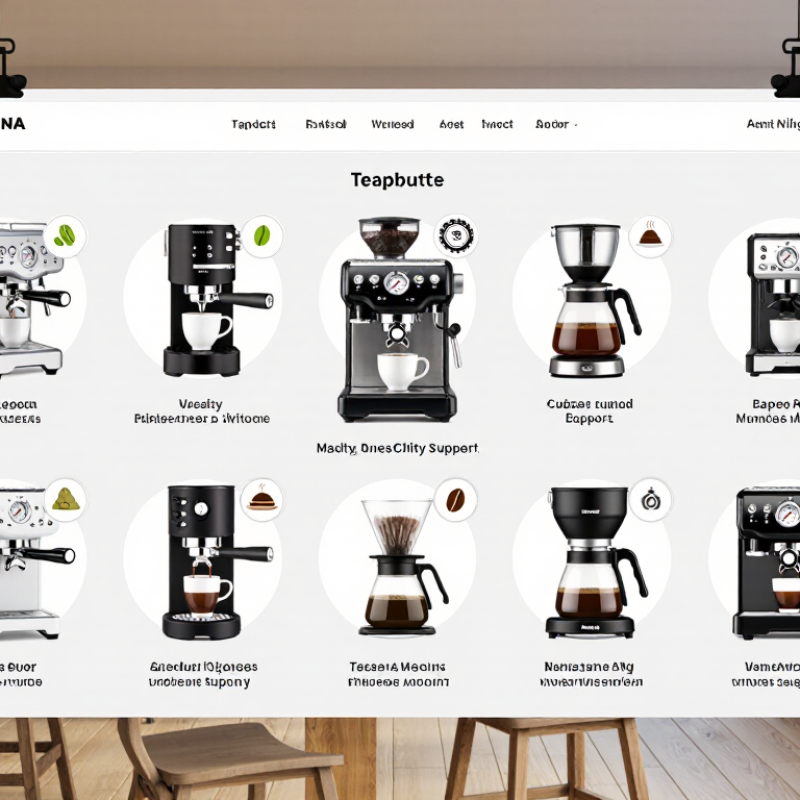
How China’s Home Coffee Manufacturing Market Serves Global Buyers
China Top 10 Coffee At Home Manufacturers for Global Buyers?
China’s home coffee manufacturing market serves buyers through flexible OEM production, component sourcing, and export-ready assembly. The International Coffee Organization reported global coffee consumption near 177 million 60-kilogram bags in 2022/23. That demand supports steady interest in household brewing equipment. Chinese factories commonly produce grinders, capsule systems, espresso machines, pour-over tools, and compact accessories. Buyers can often adjust heating systems, materials, packaging, and electrical specifications for different markets.
The strongest suppliers usually show more than attractive samples. They provide factory audit records, test reports, traceable components, and stable production capacity. A practical audit should inspect metal thickness, food-contact plastics, cable protection, pump consistency, and noise levels. Small details matter. A loose switch can damage customer trust. Independent testing remains important because factory documents may not cover every destination requirement.
Grand View Research has identified continuing growth in the global coffee machine market, driven partly by household consumption and convenience. This trend creates opportunities for Chinese manufacturers with short development cycles. However, low prices alone are weak evidence of capability. Buyers should compare pilot batches, defect rates, warranty procedures, and spare-part access. A polished sample can still hide uneven assembly. That risk deserves attention. The best sourcing decision balances engineering support, compliance evidence, repeatability, and realistic delivery schedules.
Criteria for Ranking China’s Top 10 At-Home Coffee Manufacturers
China Top 10 Coffee At Home Manufacturers for Global Buyers?
Ranking China’s top 10 at-home coffee manufacturers requires more than factory size. The International Coffee Organization estimated global coffee consumption at 177.9 million 60-kilogram bags in 2023/24. This demand supports a wider home-brewing equipment market, but it also raises supplier risks. I would score manufacturers across export experience, production capacity, engineering depth, and product consistency. Evidence matters. Not promises.
Quality systems should carry significant weight. ISO 9001 certification, documented inspections, electrical safety testing, traceable components, and stable packaging deserve verification. Buyers should also review applicable market requirements, such as CE, UKCA, or FCC documentation, depending on destination. The International Trade Centre’s Trade Map can help compare export activity under relevant coffee-machine customs codes. I would examine three years of shipment history, defect rates, warranty response times, and average lead times. No score is perfect. Smaller factories may offer better customization, while larger suppliers often provide stronger continuity. That trade-off deserves honest weighting.
Tips: Request a sample from the intended production line, not a showroom unit. Test heating time, pressure stability, noise, sealing, and cleaning access. Ask for recent inspection reports and a corrective-action record. Confirm whether replacement parts remain available after the warranty period. A practical ranking could assign 25% to quality and compliance, 20% to manufacturing capability, 15% to export reliability, 15% to product development, 15% to service, and 10% to sustainability. These percentages are adjustable; real purchasing priorities rarely fit neatly into a spreadsheet.
| No. | Ranking Dimension | Weight | Objective Evaluation Indicators | Recommended Evidence for Global Buyers | Score |
|---|---|---|---|---|---|
| 1 | Manufacturing Capability | 18% | Production-line control, assembly capacity, tooling ownership, process automation, and documented production capacity for home coffee equipment. | Factory audit, production-flow records, equipment list, capacity statements supported by verifiable documents, and sample production records. | 0–5 |
| 2 | Product Safety and Compliance | 15% | Electrical safety, thermal protection, insulation, grounding, material safety, and compliance with the destination market’s applicable requirements. | Valid test reports and technical files applicable to the exact model; examples may include IEC 60335-1 and relevant appliance-particular standards. | 0–5 |
| 3 | Quality Management System | 13% | Incoming-material inspection, in-process controls, final inspection, nonconformity handling, corrective actions, traceability, and complaint management. | Current ISO 9001 certificate issued by an accredited certification body, inspection plans, control charts, audit reports, and corrective-action records. | 0–5 |
| 4 | Product Engineering and Customization | 11% | Capability to modify brewing systems, heating elements, pumps, grinders, controls, housing materials, software, packaging, and user documentation. | Engineering team information, design-change procedure, prototypes, test specifications, tooling records, and documented intellectual-property ownership or licensing. | 0–5 |
| 5 | Export and Market Readiness | 10% | Experience preparing products for different voltage, frequency, plug, labeling, language, packaging, customs, and regulatory requirements. | Redacted shipping records, destination-specific labels, export documentation samples, packaging specifications, and compliance files for the target market. | 0–5 |
| 6 | Supply-Chain Reliability | 9% | Qualified supplier management, critical-component control, dual sourcing where practical, material traceability, and continuity planning. | Approved-supplier list, supplier-audit procedure, incoming inspection records, component traceability, and business-continuity documentation. | 0–5 |
| 7 | Delivery Performance | 8% | Consistency of sample approval, production scheduling, order fulfillment, lead-time communication, and shipment documentation. | Historical on-time-delivery records, production schedules, purchase-order milestones, agreed lead-time definitions, and escalation procedures. | 0–5 |
| 8 | After-Sales and Spare-Parts Support | 7% | Warranty administration, technical support, repair procedures, spare-parts availability, service manuals, and failure-analysis capability. | Warranty policy, service-level terms, spare-parts catalogue, repair instructions, response-time records, and returned-product analysis reports. | 0–5 |
| 9 | Environmental and Social Management | 5% | Energy and waste management, restricted-substance control, packaging reduction, worker safety, and responsible manufacturing practices. | ISO 14001 or equivalent environmental documentation, RoHS-related material declarations where applicable, waste records, and workplace-safety procedures. | 0–5 |
| 10 | Commercial Transparency | 4% | Clarity of quotations, payment terms, tooling ownership, minimum-order conditions, change-control rules, warranty limits, and contractual responsibilities. | Signed quotation, product specification sheet, quality agreement, tooling agreement, warranty terms, and clearly defined acceptance criteria. | 0–5 |
| Total Ranking Weight | 100% | Recommended formula: Weighted Score = Σ (Dimension Score ÷ 5 × Dimension Weight) | |||
Evaluation should be based on the exact product model, destination market, current documentation, factory verification, and buyer-specific requirements. Standards and certification requirements may vary by product type and importing country.
Profiles of the Top 10 Chinese Home Coffee Equipment Makers
China’s home coffee equipment sector is moving from basic brewing tools toward connected, space-saving systems.
The International Coffee Organization reported global coffee consumption of about 177 million 60-kilogram bags in 2023/24. That demand supports wider equipment sourcing, including Chinese production.
Maker One focuses on compact espresso machines for small kitchens.
Maker Two supplies stainless-steel capsule brewers with replaceable water tanks.
Maker Three develops manual grinders with ceramic burr options.
Maker Four produces electric grinders for entry-level users.
Maker Five specializes in pour-over kettles and digital scales.
Maker Six combines brewing, heating, and milk-frothing functions in one unit.
Maker Seven serves commercial-looking home machines with pressure gauges.
Maker Eight emphasizes portable brewers for travel and offices.
Maker Nine manufactures coffee drippers, servers, and reusable filters.
Maker Ten provides OEM assemblies, packaging, and private-label support.
Practical variety matters.
Euromonitor International’s Coffee in China 2024 analysis points to continuing premiumization and stronger interest in home preparation. However, market growth does not automatically prove manufacturing quality.
Buyers should inspect:
pump stability, thermal recovery, food-contact materials, plug certification, and spare-part availability.
Ask for test records. Ask again. Some factory descriptions remain too general, especially around extraction pressure and service life.
A reliable supplier should provide traceable specifications, sample testing, and clear warranty terms. Product videos help, but they cannot replace laboratory checks or repeated brewing trials.
Products, Technologies, Certifications, and Customization Options
China’s top ten coffee-at-home manufacturers are responding to rising global demand with espresso machines, capsule brewers, drip makers, grinders, and compact all-in-one units. The International Coffee Organization estimated global consumption at about 177.9 million 60-kilogram bags in 2023/24. That volume supports continued investment in home equipment, especially in export-focused factories.
Product technology varies widely. Thermoblock heating reduces warm-up time, while PID control improves temperature stability. Conical burr grinders offer more consistent particles than basic blade systems. Some suppliers now add pressure profiling, touchscreen controls, milk-frothing sensors, and app connectivity. These features sound impressive. Buyers should request extraction tests, noise readings, heating curves, and lifecycle results, rather than relying on catalog claims.
Certifications require careful checking. CE, RoHS, REACH, EMC, and food-contact compliance may support European sales, while ETL or UL recognition can matter in North America. ISO 9001 indicates documented quality systems, but it does not guarantee excellent coffee. Customization may include voltage, plug type, casing color, logo placement, packaging, firmware, water-tank size, and regional language settings. Minimum order quantities and mold fees must be confirmed early. I have seen attractive samples fail during repeated brewing tests. That risk is easy to underestimate. Independent laboratory reports, factory audits, spare-parts plans, and traceable serial numbers provide stronger evidence for global buyers.
How Global Buyers Can Compare Suppliers and Place Orders
China Top 10 Coffee At Home Manufacturers for Global Buyers?
The International Coffee Organization reported global coffee consumption at about 177.9 million 60-kilogram bags in 2023/24. This demand supports wider home-brewing equipment purchases. Global buyers should compare suppliers through evidence, not attractive catalog photos. Request factory registration, production capacity, quality certificates, and recent export references. Check whether certificates match the exact model.
Start with samples.
Test brewing temperature, pressure stability, noise, cleaning access, and packaging strength. Record every result in a comparison sheet. Compare material specifications, spare-part availability, warranty response times, minimum order quantities, and production lead times. A cheaper unit may require costly replacement parts later. Total landed cost matters more than the factory quotation.
The International Trade Centre recommends using trade data when evaluating sourcing markets and product flows. Buyers can review relevant HS codes, shipment trends, and destination requirements before ordering. For electrical appliances, confirm applicable safety and electromagnetic-compatibility testing in the target market. For food-contact components, request material declarations and migration-test reports. An on-site audit or independent inspection is valuable before balance payment. Use a written purchase agreement covering tolerances, defect rates, labeling, Incoterms, and dispute procedures. A spreadsheet can still lie. I would repeat sample testing after any design change, because small substitutions can affect taste, safety, or durability. Stage the order when possible: sample approval, pilot production, inspection, then full shipment. That process feels slower, but it exposes weak suppliers early.
Related Posts
-
7 Best Home Coffee Station Ideas to Transform Your Kitchen Experience
-

The Evolution of the Best Coffee Barista Experience in a Modern Café
-

Navigating the Challenges of Sourcing the Best High Quality Coffee in a Competitive Market
-

Trends in Robot Barista Technology for 2025 and Innovative Approaches to Optimize Coffee Services
-

Achieving Superior Quality in Coffee Bean Production and How to Ensure Your Supply Chain Compliance
-

Exploring Unique Alternatives to Roasted Coffee: Discovering Global Brews Beyond Tradition