China Best Heavy Duty Lock Manufacturers for Global Buyers?
Global buyers comparing China-based manufacturers need more than a polished product catalog. A Heavy Duty Lock must match its intended use, installation conditions, and expected level of daily wear. A lock fitted to a storage cabinet may face different demands from one used on industrial equipment or a commercial door. Small details matter: body material, shackle dimensions, corrosion protection, key options, and the consistency of each production batch.
Supplier evaluation should focus on verifiable information. Ask for current specifications, material details, sample availability, and documented quality checks. If a product has relevant test reports or certifications, confirm their scope and issuing organization rather than relying on a logo alone. Clear answers about customization, minimum order quantities, packaging, and lead times can also reveal how well a manufacturer understands international purchasing needs. Details matter. So does communication.
Price can be tempting as a quick comparison, but it rarely tells the whole story. A low quote may exclude testing, protective packaging, or a finish suited to the buyer’s environment. The reverse is also true: a higher price does not automatically prove better performance. That is worth remembering. This guide introduces manufacturers and practical points for comparing them, while recognizing that the right choice depends on the application, order requirements, and evidence available. Buyers should verify claims directly and assess samples where practical; no single supplier is best for every project.
What Defines a Heavy-Duty Lock and Where Is It Used?
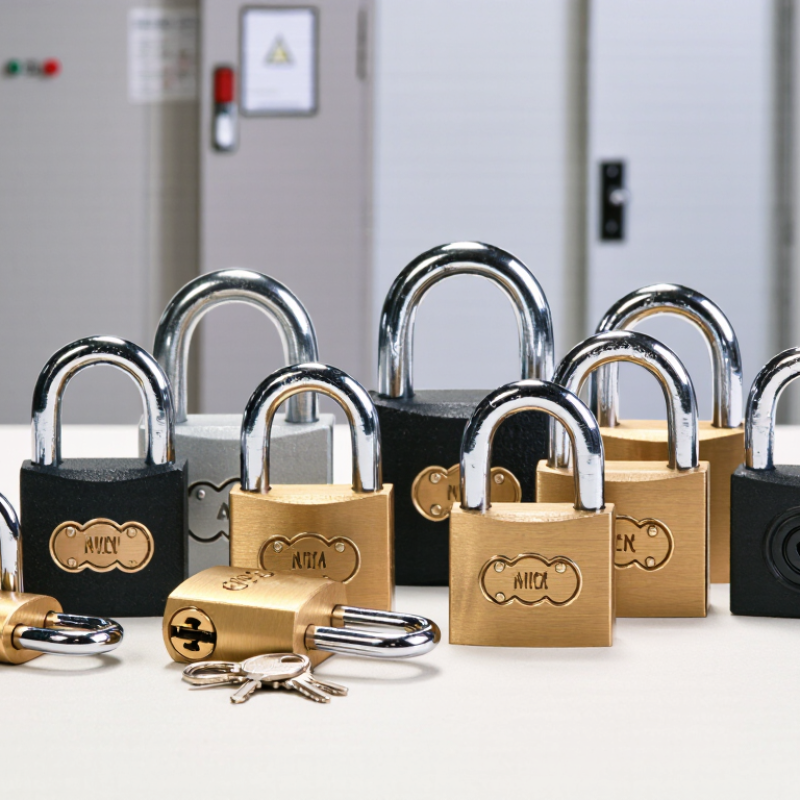
A heavy-duty lock is designed for repeated use and higher physical stress than a basic household lock. Its strength comes from the whole assembly: a robust body, a hardened bolt or shackle, a well-protected locking mechanism, and suitable mounting hardware. A thick shackle alone does not make a lock dependable if the hasp or door frame can bend.
These locks are commonly used on warehouse doors, perimeter gates, storage units, utility cabinets, and equipment enclosures. On a loading gate, for example, a lock may face rain, dust, vibration, and frequent handling. Corrosion-resistant materials and a covered keyway can help, but the site conditions matter. A lock suited to a sheltered cabinet may wear quickly outdoors.
Fit is critical. Check the door’s thickness, the gap around the hasp, and how the lock will be exposed to weather. A poorly aligned bolt can bind, while loose fasteners can weaken the installation. That matters. Heavy-duty does not mean indestructible, and security depends on the surrounding structure as well as the lock. Buyers should compare construction, operating conditions, maintenance needs, and replacement parts—not just weight or appearance. One detail is easy to miss: a heavy lock can be awkward for staff to use every day.
Which Materials and Features Determine Lock Durability?
Lock durability starts with the metal, but construction matters just as much. A hardened steel bolt resists cutting and repeated impact, while stainless steel helps slow rust in wet or coastal settings. Brass tolerates moisture but is softer, so it may suit internal components better than an exposed shackle. A corrosion-resistant finish helps, yet damaged plating can leave bare metal vulnerable. Small details matter: a drain opening, tight-fitting cover, and protected keyway can limit water and grit entering the mechanism.
Testing gives buyers a useful comparison. The Builders Hardware Manufacturers Association’s ANSI/BHMA A156.2-2017 standard assigns cylindrical locks cycle benchmarks of:
800,000 for Grade 1, 400,000 for Grade 2, and 200,000 for Grade 3.
These figures measure repeated operation, not resistance to every outdoor condition. Corrosion also carries a wider cost: NACE International’s 2016 IMPACT study estimated it at US$2.5 trillion annually, or 3.4% of global GDP.
For a heavy-duty lock, ask for test documentation covering both operating cycles and environmental exposure. A high cycle rating alone can mislead. In practice, installation, lubrication, and the quality of the door or hasp also affect service life; buyers sometimes overlook these details.
What Types of Heavy-Duty Locks Do Manufacturers Produce?
Heavy-duty lock manufacturers typically produce padlocks, deadbolts, mortise locks, electronic locks, and enclosure locks for cabinets or equipment housings. A hardened-steel padlock with a shrouded shackle can resist cutting attempts on gates and storage units, while a deadbolt uses a solid bolt for doors. Mortise locks fit into a pocket cut in the door edge and are common in commercial settings. Fit matters. Door thickness, frame strength, and exposure to rain or dust all affect performance.
Electronic models add keypad, card, or mobile access, but still need a sound mechanical body and reliable power backup. Grand View Research’s Smart Lock Market Size, Share & Trends Analysis Report (2023) estimated the global smart-lock market at USD 2.8 billion in 2022 and forecast 19.4% annual growth from 2023 to 2030. This estimate concerns smart locks broadly, not heavy-duty products alone. It signals rising interest in connected access, rather than proving that electronic locks suit every site. That is not enough. Buyers should compare materials, bolt dimensions, corrosion protection, and independently tested security ratings; a “heavy-duty” label by itself does not tell the full story.
How Can Global Buyers Evaluate Lock Manufacturers?
Global buyers should evaluate heavy-duty lock manufacturers through evidence, not polished sales claims. Ask how each model is tested, and request reports that identify the test method, sample size, and date. A cycle test can reveal wear in the latch and key mechanism. Corrosion testing may matter for coastal or humid installations, but results depend on the exposure conditions.
Check the lock’s materials, dimensions, and production controls. Ask whether steel grades and critical tolerances are documented, and whether batches can be traced to inspection records. A factory visit can help buyers see assembly and quality checks firsthand. If travel is not practical, request clear production videos and arrange independent sample inspection. A polished sample can hide uneven production.
Test a small order before committing to a larger shipment. Compare several units for smooth key turning, secure latching, and consistent finish. No factory is perfect. The useful question is how it handles defects: Does it investigate the cause, share corrective steps, and meet agreed lead times? Communication is part of reliability, though buyers can overlook it when comparing prices. Review warranty terms and spare-part availability in writing, then weigh the full supply risk alongside the unit cost.
What Standards and Sourcing Factors Affect International Purchases?
International buyers should compare more than quoted unit prices when sourcing heavy-duty locks from China. Start with the intended use: a warehouse gate, truck compartment, and outdoor cabinet face different loads, moisture, and handling. Ask for drawings, material grades, finish details, and dimensional tolerances. These details affect fit and service life.
Check which standards apply in the destination market and application; requirements differ. Request current test reports covering cycle durability, corrosion exposure, and load performance, then confirm the sample matches the production specification.
ISO 9001 indicates a quality-management system, not automatic proof that each lock meets product requirements. Review inspection records, change-control processes, packaging, lead times, and spare-part availability. A clear written specification reduces mismatched expectations, though it cannot remove every production variation.
Tips:
Test samples on the actual hasp or door, not only on a bench. Photograph measurements and finish before approval. Small details matter. Ask how defects are handled and who pays for rework or replacement. Payment milestones and pre-shipment inspection can help manage risk, but each arrangement needs careful review. A low quote may hide thin plating, loose tolerances, or packaging that lets parts rub during transit. Don’t assume; request evidence.