Best Manual Linear Stage Options for Precision Positioning?
The demand for precision positioning in various fields drives the selection of the best Manual Linear Stage options. These devices play a crucial role in applications ranging from laboratory experiments to industrial automation. They allow users to achieve accurate movement. However, finding the right one can be challenging.
When searching for a Manual Linear Stage, it's essential to consider factors like load capacity, travel range, and resolution. Some stages are designed for lightweight applications, while others cater to heavy-duty requirements. It's crucial to weigh your specific needs against the available features.
Despite the advancements in technology, certain limitations exist. Not all offerings provide the necessary precision for every task. Users might find themselves questioning their choices after implementation. A deeper understanding of your application’s demands can significantly impact performance. Exploring the market thoroughly will help in making an informed decision, ultimately leading to improved results.
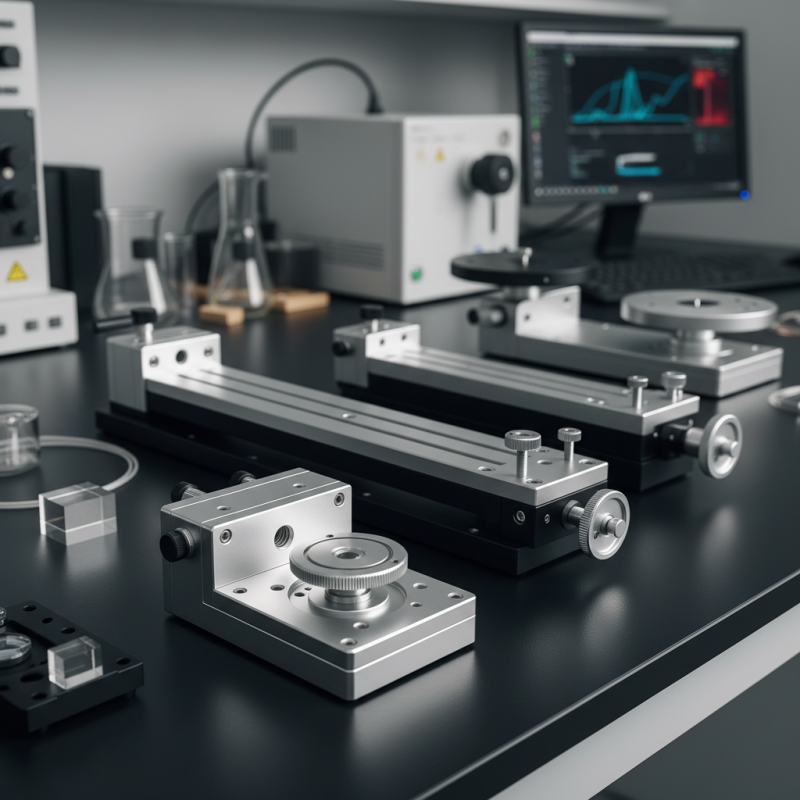
Key Features to Consider in Manual Linear Stages for Precision Positioning
When considering manual linear stages for precision positioning, several key features come into play. One important aspect is the travel range. Longer ranges may be tempting, but they can affect accuracy. Stages with shorter travel often yield better precision. Users must find the right balance based on their specific application needs.
Another crucial factor is the design of the stage. Sturdy construction materials contribute to stability during operation. However, heavier stages may hinder ease of movement. Integrating smooth motion with adequate support can be challenging. Pay attention to the bearing system as well. Quality bearings reduce friction and enhance performance, but they can also add to the overall cost.
Lastly, the ease of use cannot be overlooked. Simple adjustments are essential for accurate positioning. While some stages offer fine-tuning features, they can also complicate the setup. Find a stage that matches your skill level and operational demands. The nuances in each design can be significant, so it's worth investing time in careful evaluation and testing.
Top Manufacturers of Manual Linear Stages for Precise Movements
When it comes to precision positioning, the choice of manufacturers for manual linear stages is crucial. Many companies specialize in producing these essential components. They focus on creating products that provide smooth movement and high accuracy. Each manufacturer has its own unique approach to design and functionality.
Materials used in these linear stages can greatly affect their performance. Some manufacturers prioritize lightweight materials, while others focus on durability. This variation can make it challenging to determine the best option for a specific application. Additionally, the range of available features, such as locking mechanisms or graduated scales, adds to the complexity of selection.
It's important to assess the intended use cases. Laboratory setups may require different specifications than industrial applications. Users often overlook their specific needs in favor of general features. Carefully reviewing choices can lead to better outcomes. While some companies offer extensive catalogs, filtering through these options can prove difficult. Each choice deserves consideration for its merits and shortcomings.
Comparative Analysis of Different Manual Linear Stage Designs
When selecting a manual linear stage, precision is key. Different designs offer unique advantages and challenges. A comparative analysis of various manual linear stages shows that their mechanical properties vastly differ. For example, a report by the Precision Engineering Society indicated that stages with ball-bearing guides offer smoother movements. However, they can be more sensitive to dust and debris.
Friction-based designs, on the other hand, provide a sturdier option. While they may not achieve the same level of precision as ball-bearing guided stages, they are often easier to maintain. A study by the Journal of Mechanical Design emphasizes that long-term reliability can be compromised with tightly packed systems, leading to wear over time. This is especially critical in environments with heavy usage.
Another aspect is the ease of adjustability. Some designs feature fine-tuning knobs that enhance user control. But, they can also be difficult to operate intuitively for newcomers. It’s essential to weigh the options and consider operational needs. Balancing precision with usability can be tricky, and the right choice depends on specific applications.
Applications of Manual Linear Stages in Various Industries
Manual linear stages play a vital role across various industries. These devices provide precise positioning, crucial for tasks requiring accuracy. In laboratories, for instance, manual stages allow scientists to position samples with meticulous care. This ensures accurate measurements, a necessity in experiments. Many labs rely heavily on these stages, yet sometimes their movement can feel a bit stiff. Users must ensure they maintain these tools to avoid any hindrances.
In manufacturing, manual linear stages find their place in assembly lines. Workers use them to align components accurately. With a simple turn of a knob, they can achieve remarkable precision. However, some operators often report inconsistencies in adjustments. This can lead to errors in production. Addressing these inconsistencies requires regular checks and calibration, which can be overlooked during busy production schedules.
Medical equipment also benefits from these stages. Surgeons and technicians utilize them for precise tool positioning. They contribute to the successful execution of delicate procedures. Yet, it’s important to note that not all stages are created equal. Variability in quality can impact performance. Choosing the right manual linear stage demands careful consideration of the specific application and the environment in which it will operate.
Tips for Maintaining and Optimizing Manual Linear Stages Performances
Maintaining manual linear stages is crucial for optimal performance. Regular inspection of components can reveal wear and tear. According to industry data, nearly 30% of performance issues stem from inadequate maintenance practices. Operators often overlook lubrication, which can severely affect movement accuracy and repeatability.
Optimizing manual linear stages involves fine-tuning setup configurations. Adjusting the alignment can improve precision by up to 15% in some studies. However, users often underestimate the impact of vibration. A study found that even minor vibrations can distort readings, leading to potentially significant errors in positioning.
User feedback highlights that regular calibration is essential, yet it is frequently neglected. Many operators assume their stages are aligned and functioning properly without routine checks. A proactive approach to maintenance, such as cleaning and periodic recalibration, can mitigate these challenges. Still, many fail to recognize that consistent attention to these details can dramatically enhance performance.