

7 Best Lumebox Red Light Therapy Devices in 2026
Choosing a red light device should involve more than a sleek panel and a confident promise. Lumebox Red Light Therapy options can differ in treatment area, controls, portability, and the information provided about their light output. Those details matter when comparing a compact device for a desk with a larger unit intended to cover more skin at once.
Photomedicine researcher Michael Hamblin has emphasized that wavelength and dose are important variables in photobiomodulation. This is a paraphrase of his research, not a verbatim quotation. It offers a useful lens for this guide: check each product’s published specifications, usage instructions, and safety guidance rather than relying on marketing language alone. A bright-looking glow cannot tell you everything.
This 2026 roundup examines seven devices through practical questions: What area can each one cover? How easy are its controls to use? Are its specifications clearly stated? We also consider size, setup, and the likely fit for different routines. No single device suits everyone, and product claims should not replace professional medical advice. That caveat may feel less exciting. It is worth keeping in view. The comparisons ahead aim to make the trade-offs easier to see, without treating red light as a guaranteed fix.
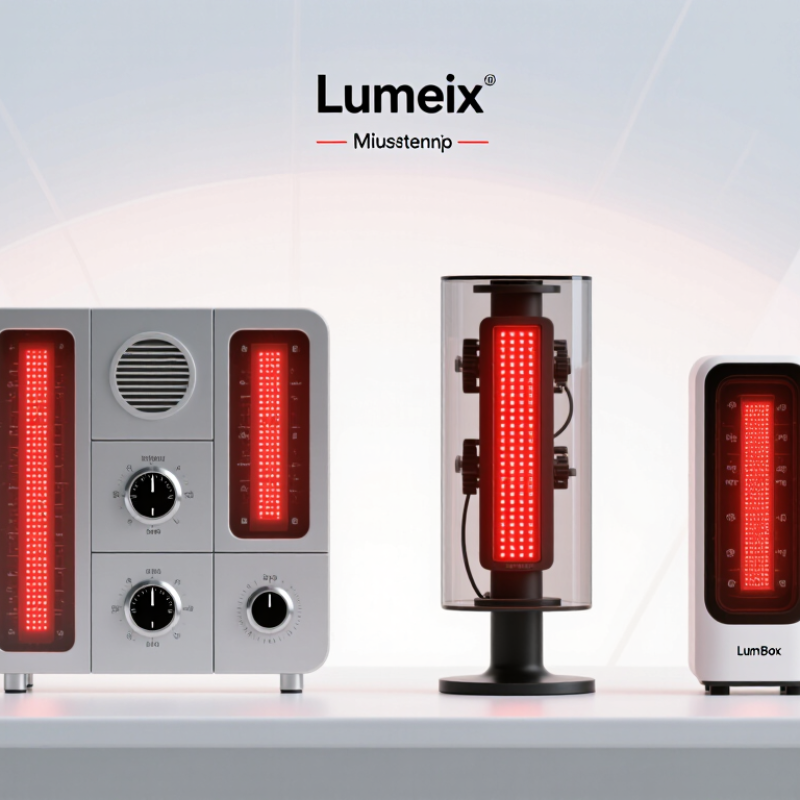
How Lumebox Red Light Therapy Devices Work
Red-light therapy devices use light-emitting diodes to deliver red or near-infrared wavelengths to the body. Red light, often around 630–660 nanometers, mainly reaches surface tissues; near-infrared light can travel somewhat deeper. Neither works like a warming lamp. The aim is to prompt a biological response, not simply heat the skin.
Researchers are studying how light-sensitive molecules in cells may affect energy production and signaling. Some findings suggest changes in mitochondrial activity, but the full process is still being examined. Results vary. Wavelength, light intensity, distance, and exposure time all matter, so two devices can feel similar yet deliver different doses. Follow the device’s instructions, keep the treatment area uncovered, and use eye protection when recommended. A gentle warmth is possible, but strong heat or discomfort is a reason to stop. That matters.
For home use, consistency may be more useful than stretching a session. Keep a simple log of duration, distance, and skin response; memory gets fuzzy. Evidence for specific benefits remains mixed, and a device should not replace care for a diagnosed condition. People with light sensitivity or medicines that increase sensitivity should check with a qualified clinician before use. Some uncertainty remains, which is worth acknowledging.

Key Features to Compare Across Lumebox Models
When comparing red-light therapy models, look beyond panel size and sleek finishes. The Global Wellness Institute’s 2024 report estimated the global wellness economy at $6.3 trillion in 2023. That signals strong consumer interest, not proof that any device works. Specs matter.
Check wavelength, measured irradiance, treatment area, and recommended distance. The World Association for Photobiomodulation Therapy’s dosage guidance highlights wavelength and delivered energy as key treatment variables. A device listing only peak output leaves a gap: ask whether irradiance was measured at the stated treatment distance. Small detail. Big difference.
Compare the light footprint against where you plan to use it. A compact unit may suit a desk or targeted area; a larger panel can cover more skin, but needs space and a stable stand. Check timers, cooling noise, eye-protection instructions, and return terms, too. These details shape daily use. I would also note what remains unclear: published specifications do not guarantee consistent results for every person. Choose a model with transparent measurements and clear instructions, not the most impressive-looking number.
Seven Lumebox Devices and Their Distinct Advantages
A useful comparison of seven red-light device styles starts with where and how people use them. A compact handheld unit suits small areas, such as a wrist or knee, and stores easily in a drawer. A tabletop panel can stand beside a desk for short, seated sessions. Larger panels cover more of the torso, but need stable floor space and careful positioning. More coverage is not automatically better.
Flexible wraps offer close contact around a joint, while a face mask keeps light near the cheeks and forehead. Both can be easier to position than a standing panel. A neck-and-shoulder device targets a commonly stiff area, though its fit may vary between users. A travel-sized unit is convenient in a suitcase. Small trade-off: its treatment area is usually limited.
Before choosing, check the stated wavelengths, irradiance data, recommended distance, and session guidance. These details matter more than dramatic product claims. Keep sessions comfortable, protect your eyes as directed, and avoid using a device over irritated skin without professional advice. Results vary, and red-light therapy should not replace medical care. I would still compare real-world ease of use; specifications alone do not tell the whole story.
7 Best Lumebox Red Light Therapy Devices in 2026 - Seven Lumebox Devices and Their Distinct Advantages
A format-based comparison of seven common red-light therapy device types. These are general device categories, not specific product models or a ranked list; features and performance vary by device.
| Device Type | Typical Coverage | Distinct Advantage | Practical Limitation | Often Suited To | What to Check |
|---|---|---|---|---|---|
| Handheld device | Small, targeted areas | Portable and easy to position for localized use | Requires repositioning to cover larger areas | People who want a compact device for occasional, targeted sessions | Treatment-area size, operating instructions, and whether the device specifies red light, near-infrared light, or both |
| Compact tabletop panel | Face, neck, or another small area, depending on panel dimensions | Can be set up on a desk or counter, leaving the hands free | Limited coverage compared with larger panels | Users who prefer a stationary setup for a small treatment area | Panel dimensions, recommended distance, timer controls, and eye-safety guidance |
| Mid-size panel | A moderate body area at a time | Balances broader coverage with a relatively manageable footprint | May still require changing position for whole-body coverage | People seeking a home setup for repeat use on different body areas | Usable illuminated area, mounting options, and the manufacturer's session guidance |
| Large or full-body panel | A larger portion of the body, depending on panel size and placement | Can reduce the need to reposition between areas | Takes more space and may require a stable stand or wall mount | Users with dedicated space for a stationary setup | Panel dimensions, electrical requirements, stability, recommended distance, and irradiance measurement details |
| Flexible wrap | A body area the wrap can fit around | Conforms to some body contours and can be easier to position than a rigid panel | Coverage depends on fit; straps and cables can affect comfort and movement | People who value a flexible, close-fitting format for a specific area | Fit range, cleaning instructions, controller and timer features, and whether the light output is specified |
| Light belt | A band-shaped area around the waist or another area the belt fits | Hands-free positioning can make setup straightforward | Usually covers a narrower area than a panel | Users who prefer a wearable format over a stationary device | Adjustability, secure fit, power source, timer, and instructions for use |
| Face mask | Areas of the face covered by the mask | Designed for hands-free use over a defined facial area | Fit and coverage vary; eye protection and comfort require attention | People looking for a face-specific wearable format | Eye-safety instructions, fit, cleaning guidance, treatment controls, and wavelength specifications |
Selection and safety: Red-light and near-infrared wavelengths, output, coverage, and recommended use vary among devices. Some devices use red light in roughly the 630–660 nm range and near-infrared light in roughly the 810–850 nm range, but these ranges are not universal. Check the specifications and instructions for the individual device, follow its eye-safety guidance, and consult a qualified healthcare professional if you have a medical condition, take photosensitizing medication, or have concerns about use.
Choosing a Lumebox Device for Your Needs
Choosing a device starts with the area you want to treat. A compact panel suits a face or small joint; a larger panel can cover your back or legs without constant repositioning. Check the treatment area, wavelength range, and irradiance at a stated distance. Numbers without measurement conditions are hard to compare. Fit matters.
Research offers useful context, but not a universal buying rule. A 2009 Lancet systematic review examined 16 randomized trials involving 820 people with neck pain and found short-term pain relief from low-level laser therapy. That evidence applies to specific protocols, not every home device or body concern.
A 2014 controlled study in Photomedicine and Laser Surgery included 136 volunteers and reported skin improvements after red and near-infrared light treatments. Its setup and schedule may differ from what a consumer device provides.
For easier sessions, consider weight, stand stability, eye protection, and a timer you can operate without stretching. If you want hands-free use, a panel with adjustable height may be more practical than a handheld unit. Small details matter. I would not choose by advertised power alone; published measurements, clear instructions, and a realistic treatment schedule are more useful. Even then, results vary, and the evidence is still developing.
Safe and Effective Use of Lumebox Red Light Therapy
Safe and Effective Use of Red Light Therapy Devices
Red light therapy works best as a measured routine, not a quick fix. Check the device instructions for recommended distance and session length. Keep the treatment area clean and uncovered, and position the light as directed. More exposure is not automatically better. Excessive sessions may cause skin discomfort, and results can vary between people. Be patient. Changes, if they occur, may take time.
Tips: Set a timer and begin with the shortest recommended session. Protect your eyes as instructed, especially when treating near your face. Keep a simple log of dates, session lengths, and any redness or sensitivity. It is easy to forget what you tried.
Avoid using a device on irritated or injured skin unless a qualified health professional advises you to do so. Ask a clinician before use if you have a condition affected by light, take medication that increases light sensitivity, or are pregnant. Stop if you notice persistent discomfort. A regular schedule sounds simple, but real life interrupts it; missing a session is better than trying to make up for it with a longer one. Red light therapy should support, not replace, appropriate medical care.